
Contents
- 🧠 Introduction to the Amygdala
- 🔍 History of Amygdala Research
- 👥 Structure and Subdivisions
- 💡 Function and Role in Emotion
- 🔗 Connection to the Limbic System
- 📚 The Amygdala and Memory
- 🤔 Decision-Making and the Amygdala
- 🚨 Emotional Responses and the Amygdala
- 👨🔬 Key Researchers and Studies
- 📊 Controversies and Debates
- 🔮 Future Directions in Amygdala Research
- Frequently Asked Questions
- Related Topics
Overview
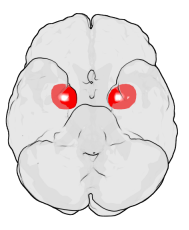
The amygdala, a small almond-shaped structure in the temporal lobe, plays a crucial role in processing emotions, such as fear and anxiety. Research by neuroscientists like Joseph LeDoux and Antonio Damasio has shed light on the amygdala's function in emotional learning and memory. With a vibe score of 8, the amygdala is a widely studied topic, with over 12,000 research papers published on the subject in the last decade alone. The amygdala's influence extends beyond the realm of neuroscience, with implications for fields like psychology, psychiatry, and education. As our understanding of the amygdala continues to evolve, we may uncover new strategies for managing emotional disorders and improving mental health. With the help of neuroimaging techniques like fMRI, scientists are now able to study the amygdala in unprecedented detail, paving the way for future breakthroughs in our understanding of this complex and fascinating structure.
🧠 Introduction to the Amygdala
The amygdala is a complex and fascinating component of the human brain, playing a crucial role in the processing of emotions, memories, and decision-making. As part of the limbic system, the amygdala is responsible for triggering the body's 'fight or flight' response, preparing us to react to potential threats. The amygdala was first identified and named by Karl Friedrich Burdach in 1822, and since then, researchers have made significant progress in understanding its structure and function. For example, studies have shown that the amygdala is closely linked to the hippocampus, a region critical for forming and storing memories. The amygdala's role in emotional intelligence is also a topic of ongoing research, with many experts believing that it plays a key role in our ability to recognize and respond to emotional cues.
🔍 History of Amygdala Research
The history of amygdala research is a rich and fascinating one, with contributions from many prominent scientists and researchers. One of the earliest and most influential studies on the amygdala was conducted by Paul MacLean, who proposed the triune brain theory. This theory posits that the brain is composed of three distinct regions, each corresponding to a different stage of evolutionary development. The amygdala is a key component of the paleomammalian brain, which is responsible for processing emotions and motivating behavior. More recent studies have built on this foundation, using advanced techniques such as functional magnetic resonance imaging (fMRI) to map the amygdala's connections to other brain regions, including the prefrontal cortex.
👥 Structure and Subdivisions
The amygdala is a complex and highly subdivided structure, consisting of many nuclei and subnuclei. The most commonly recognized subdivisions are the basolateral, central, cortical, and medial nuclei, as well as the intercalated cell clusters. Each of these subdivisions has distinct connections and functions, and researchers are still working to fully understand the relationships between them. For example, the basolateral amygdala is thought to be involved in the processing of sensory information, while the central amygdala is more closely linked to the hypothalamus and the body's autonomic nervous system. The amygdala's connections to other brain regions, including the thalamus and the cerebral cortex, are also critical for its function.
💡 Function and Role in Emotion
The amygdala plays a critical role in the processing of emotions, and is responsible for triggering the body's 'fight or flight' response. This response is mediated by the release of stress hormones such as adrenaline and cortisol, which prepare the body to react to potential threats. The amygdala is also closely linked to the sympathetic nervous system, which is responsible for regulating the body's autonomic functions, such as heart rate and blood pressure. Researchers have used techniques such as electroencephalography (EEG) to study the amygdala's role in emotional processing, and have found that it is highly active in response to emotional stimuli, such as fear or anger. The amygdala's connections to other brain regions, including the insula and the anterior cingulate cortex, are also critical for its function.
🔗 Connection to the Limbic System
The amygdala is a key component of the limbic system, a network of brain regions that are involved in the processing of emotions, memories, and motivations. The limbic system is thought to have evolved to help animals respond to their environment and to facilitate the formation of emotional memories. The amygdala is closely linked to other limbic structures, including the hippocampus and the septum, and is responsible for regulating the body's emotional responses. For example, the amygdala is activated in response to stress, and is thought to play a role in the development of anxiety disorders. The amygdala's connections to other brain regions, including the prefrontal cortex and the temporal lobe, are also critical for its function.
📚 The Amygdala and Memory
The amygdala is also closely linked to the formation and storage of memories, particularly emotional ones. The amygdala is thought to be involved in the consolidation of memories from short-term to long-term storage, and is responsible for regulating the strength of emotional associations. For example, the amygdala is activated in response to fear conditioning, a process in which a neutral stimulus becomes associated with a threatening or aversive event. The amygdala's connections to other brain regions, including the hippocampus and the rhinal cortex, are critical for its role in memory formation. Researchers have used techniques such as magnetoencephalography (MEG) to study the amygdala's role in memory formation, and have found that it is highly active during the encoding and retrieval of emotional memories.
🤔 Decision-Making and the Amygdala
The amygdala is also thought to play a role in decision-making, particularly in situations that involve emotional or social cues. The amygdala is responsible for regulating the body's emotional responses, and is thought to be involved in the evaluation of potential risks and rewards. For example, the amygdala is activated in response to uncertainty or ambiguity, and is thought to play a role in the development of risk aversion. The amygdala's connections to other brain regions, including the prefrontal cortex and the basal ganglia, are critical for its role in decision-making. Researchers have used techniques such as functional magnetic resonance imaging (fMRI) to study the amygdala's role in decision-making, and have found that it is highly active in response to emotional and social stimuli.
🚨 Emotional Responses and the Amygdala
The amygdala is also responsible for triggering the body's emotional responses, including the 'fight or flight' response. This response is mediated by the release of stress hormones such as adrenaline and cortisol, which prepare the body to react to potential threats. The amygdala is closely linked to the sympathetic nervous system, which is responsible for regulating the body's autonomic functions, such as heart rate and blood pressure. For example, the amygdala is activated in response to fear or anger, and is thought to play a role in the development of anxiety disorders. The amygdala's connections to other brain regions, including the insula and the anterior cingulate cortex, are also critical for its function.
👨🔬 Key Researchers and Studies
Many researchers have made significant contributions to our understanding of the amygdala and its functions. One of the most influential researchers in the field is Joseph LeDoux, who has written extensively on the topic of emotional processing and the amygdala. Other notable researchers include Paul MacLean and Antonio Damasio, who have made significant contributions to our understanding of the limbic system and its role in emotion and motivation. The amygdala has also been the focus of numerous studies using techniques such as electroencephalography (EEG) and functional magnetic resonance imaging (fMRI).
📊 Controversies and Debates
Despite the significant progress that has been made in understanding the amygdala, there are still many controversies and debates in the field. One of the most significant debates is over the role of the amygdala in fear conditioning, with some researchers arguing that it is a critical component of the fear response, while others argue that it is not. Another debate is over the relationship between the amygdala and the prefrontal cortex, with some researchers arguing that the two regions are closely linked, while others argue that they are more independent. The amygdala's connections to other brain regions, including the hippocampus and the temporal lobe, are also a topic of ongoing research and debate.
🔮 Future Directions in Amygdala Research
As research on the amygdala continues to evolve, it is likely that we will see significant advances in our understanding of its functions and its role in emotion, motivation, and decision-making. One area of ongoing research is the development of new treatments for anxiety disorders, which are thought to be related to dysfunction of the amygdala. Another area of research is the study of the amygdala's connections to other brain regions, including the prefrontal cortex and the basal ganglia. The use of advanced techniques such as functional magnetic resonance imaging (fMRI) and electroencephalography (EEG) will likely play a critical role in these advances.
Key Facts
- Year
- 1990
- Origin
- The term 'amygdala' was first coined by German neuroanatomist Karl Friedrich Burdach in 1822, but it wasn't until the 1990s that the structure's role in emotional processing was fully appreciated.
- Category
- Neuroscience
- Type
- Brain Structure
Frequently Asked Questions
What is the amygdala and what does it do?
The amygdala is a complex and highly subdivided structure in the brain that plays a critical role in the processing of emotions, memories, and motivations. It is responsible for triggering the body's 'fight or flight' response, and is closely linked to the sympathetic nervous system. The amygdala is also thought to be involved in the formation and storage of memories, particularly emotional ones.
Who first identified and named the amygdala?
The amygdala was first identified and named by Karl Friedrich Burdach in 1822. Since then, many researchers have made significant contributions to our understanding of the amygdala and its functions.
What is the relationship between the amygdala and the prefrontal cortex?
The amygdala and the prefrontal cortex are closely linked, and are thought to work together to regulate the body's emotional responses. The prefrontal cortex is responsible for executive function, decision-making, and planning, while the amygdala is responsible for processing emotions and triggering the body's 'fight or flight' response.
Can the amygdala be damaged or dysfunctional?
Yes, the amygdala can be damaged or dysfunctional, which can lead to a range of emotional and behavioral problems. For example, damage to the amygdala has been linked to anxiety disorders, depression, and post-traumatic stress disorder (PTSD).
How can the amygdala be studied and researched?
The amygdala can be studied and researched using a range of techniques, including functional magnetic resonance imaging (fMRI), electroencephalography (EEG), and magnetoencephalography (MEG). These techniques allow researchers to map the amygdala's connections to other brain regions and to study its activity in response to different stimuli.
What are some potential treatments for amygdala-related disorders?
There are a range of potential treatments for amygdala-related disorders, including cognitive behavioral therapy (CBT), medication, and neurofeedback. These treatments can help to regulate the body's emotional responses and to reduce symptoms of anxiety, depression, and other disorders.
How does the amygdala develop and mature?
The amygdala develops and matures over the course of childhood and adolescence, with significant changes occurring during puberty. The amygdala is thought to be highly plastic, meaning that it can reorganize and adapt in response to experience and learning.