
Contents
- 🌈 Introduction to Spectroscopy
- 🔍 History of Spectroscopy
- 📊 Types of Spectroscopy
- 🎯 Applications of Spectroscopy
- 🔬 Instrumentation and Techniques
- 📈 Data Analysis and Interpretation
- 👥 Key Figures in Spectroscopy
- 📚 Controversies and Debates
- 🔮 Future Directions and Emerging Trends
- 📊 Spectroscopy in Everyday Life
- 🌐 Spectroscopy and Technology
- 👀 Conclusion and Future Prospects
- Frequently Asked Questions
- Related Topics
Overview
Spectroscopy, a field born out of the curiosity of 19th-century scientists like Joseph von Fraunhofer and Gustav Kirchhoff, has evolved into a powerful tool for analyzing the interaction between matter and electromagnetic radiation. With applications spanning from chemistry and biology to astronomy and materials science, spectroscopy has become an indispensable method for understanding the composition, properties, and behavior of substances. The technique, which involves measuring the distribution of light intensity versus wavelength, has led to numerous breakthroughs, including the discovery of helium in the sun and the identification of water on Mars. Today, spectroscopy is at the forefront of research in fields like quantum computing and biomedicine, with scientists like Michelle Simmons and Eric Betzig pushing the boundaries of what is possible. As technology advances, spectroscopy is poised to reveal even more secrets of the universe, from the detection of dark matter to the analysis of extraterrestrial life forms. With a Vibe score of 8, spectroscopy is an exciting and rapidly evolving field that continues to inspire new generations of scientists and engineers.
🌈 Introduction to Spectroscopy
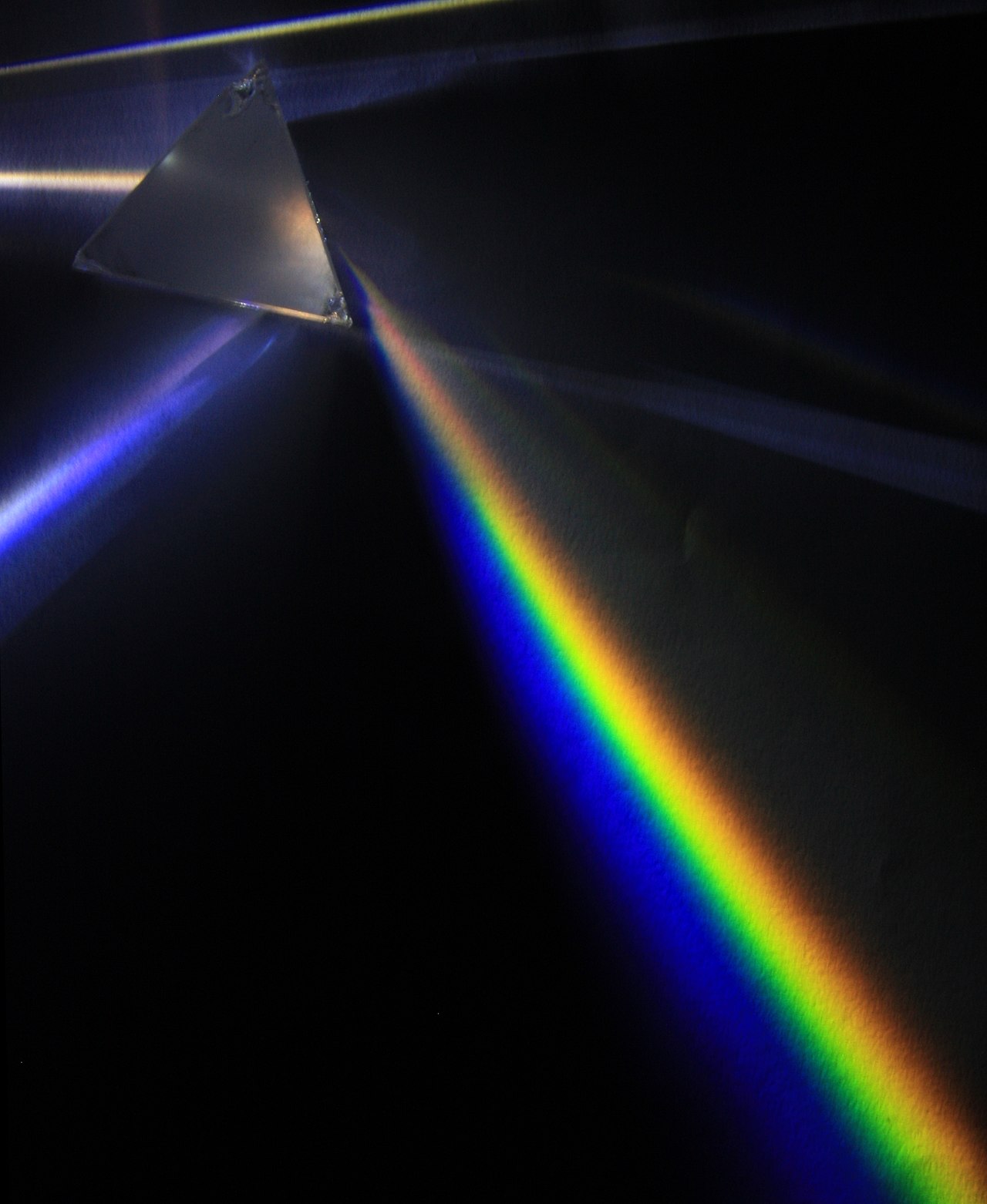
Spectroscopy is the field of study that measures and interprets electromagnetic spectra as it interacts with matter. This field has revolutionized our understanding of the physical world, from the atomic structure of elements to the molecular biology of living organisms. By analyzing the interaction between light and matter, spectroscopy has enabled us to uncover the hidden world of atoms and molecules, revealing their composition, structure, and properties. The electromagnetic spectrum is a fundamental concept in spectroscopy, encompassing all forms of electromagnetic radiation, from radio waves to gamma rays.
🔍 History of Spectroscopy
The history of spectroscopy dates back to the early 19th century, when scientists such as Joseph von Fraunhofer and Gustav Kirchhoff began to study the properties of light and its interaction with matter. The discovery of the spectrum of visible light by Isaac Newton laid the foundation for the development of spectroscopy as a scientific discipline. Over the years, spectroscopy has evolved to include various techniques, such as infrared spectroscopy and nuclear magnetic resonance spectroscopy, which have greatly expanded our understanding of the physical world. The history of spectroscopy is a rich and fascinating field that continues to inspire new generations of scientists and researchers.
📊 Types of Spectroscopy
There are several types of spectroscopy, each with its own unique applications and techniques. Ultraviolet-visible spectroscopy is commonly used to study the electronic transitions of molecules, while infrared spectroscopy is used to study the vibrational modes of molecules. Nuclear magnetic resonance spectroscopy is a powerful technique used to study the structure and dynamics of molecules, and has numerous applications in chemistry and biology. Other types of spectroscopy include raman spectroscopy and mass spectrometry, which have their own unique advantages and limitations. The choice of spectroscopic technique depends on the specific research question and the properties of the sample being studied.
🎯 Applications of Spectroscopy
Spectroscopy has a wide range of applications in various fields, including chemistry, biology, physics, and materials science. In chemistry, spectroscopy is used to identify and quantify the composition of molecules, while in biology, it is used to study the structure and function of biomolecules. In physics, spectroscopy is used to study the properties of materials and the behavior of subatomic particles. The applications of spectroscopy are diverse and continue to expand, with new techniques and technologies being developed to address emerging challenges and opportunities.
🔬 Instrumentation and Techniques
The instrumentation and techniques used in spectroscopy have undergone significant advances in recent years. Modern spectrometers are highly sophisticated instruments that use advanced technologies such as lasers and detectors to measure the interaction between light and matter. The development of new techniques such as fourier transform spectroscopy and hyperspectral imaging has greatly improved the sensitivity and resolution of spectroscopic measurements. The instrumentation and techniques used in spectroscopy continue to evolve, with new innovations and breakthroughs being reported regularly.
📈 Data Analysis and Interpretation
The analysis and interpretation of spectroscopic data require specialized skills and knowledge. Data analysis involves the use of sophisticated algorithms and software to extract meaningful information from the raw data, while data interpretation involves the use of theoretical models and simulations to understand the underlying physics and chemistry of the system. The data analysis and interpretation of spectroscopic data are critical steps in the research process, and require a deep understanding of the underlying principles and techniques. The spectroscopic data analysis software and tools are constantly being improved and updated to meet the evolving needs of researchers.
👥 Key Figures in Spectroscopy
Several key figures have made significant contributions to the development of spectroscopy. Niels Bohr and Erwin Schrodinger are two of the most influential scientists in the history of spectroscopy, and their work laid the foundation for the development of modern spectroscopic techniques. Other notable scientists include Robert Bunsen and Gustav Kirchhoff, who made important contributions to the development of spectroscopy in the 19th century. The key figures in spectroscopy continue to inspire new generations of scientists and researchers, and their work remains a testament to the power and importance of spectroscopy.
📚 Controversies and Debates
Despite its many successes, spectroscopy is not without its controversies and debates. One of the most significant challenges facing spectroscopy is the interpretation of spectroscopic data, which can be complex and ambiguous. The controversies and debates in spectroscopy are ongoing, with different researchers and scientists holding different opinions and perspectives. The spectroscopic controversies are a natural part of the scientific process, and they drive innovation and progress in the field.
🔮 Future Directions and Emerging Trends
The future of spectroscopy is exciting and promising, with new technologies and techniques being developed to address emerging challenges and opportunities. Emerging trends in spectroscopy include the use of artificial intelligence and machine learning to analyze and interpret spectroscopic data, and the development of new instrumentation and techniques such as quantum spectroscopy. The future directions of spectroscopy are diverse and multifaceted, and they will continue to shape our understanding of the physical world and the universe.
📊 Spectroscopy in Everyday Life
Spectroscopy has numerous applications in everyday life, from the food industry to the medical industry. In the food industry, spectroscopy is used to analyze the composition and quality of food products, while in the medical industry, it is used to diagnose and treat diseases. The spectroscopy in everyday life is a vital part of our daily lives, and its impact is felt in many different ways. The applications of spectroscopy in everyday life are diverse and continue to expand, with new technologies and techniques being developed to address emerging challenges and opportunities.
🌐 Spectroscopy and Technology
Spectroscopy has a significant impact on technology, from the development of new materials to the creation of new technologies. The spectroscopy and technology are closely intertwined, with spectroscopy driving innovation and progress in many different fields. The impact of spectroscopy on technology is profound, and it will continue to shape our understanding of the physical world and the universe.
👀 Conclusion and Future Prospects
In conclusion, spectroscopy is a powerful tool that has revolutionized our understanding of the physical world. From the atomic structure of elements to the molecular biology of living organisms, spectroscopy has enabled us to uncover the hidden world of atoms and molecules. The future of spectroscopy is exciting and promising, with new technologies and techniques being developed to address emerging challenges and opportunities. As we look to the future, it is clear that spectroscopy will continue to play a vital role in shaping our understanding of the physical world and the universe.
Key Facts
- Year
- 1814
- Origin
- Germany, Joseph von Fraunhofer's discovery of dark lines in the solar spectrum
- Category
- Physics and Chemistry
- Type
- Scientific Technique
Frequently Asked Questions
What is spectroscopy?
Spectroscopy is the field of study that measures and interprets electromagnetic spectra as it interacts with matter. It is a powerful tool that has revolutionized our understanding of the physical world, from the atomic structure of elements to the molecular biology of living organisms.
What are the different types of spectroscopy?
There are several types of spectroscopy, including ultraviolet-visible spectroscopy, infrared spectroscopy, nuclear magnetic resonance spectroscopy, and mass spectrometry. Each type of spectroscopy has its own unique applications and techniques.
What are the applications of spectroscopy?
Spectroscopy has a wide range of applications in various fields, including chemistry, biology, physics, and materials science. It is used to identify and quantify the composition of molecules, study the structure and function of biomolecules, and analyze the properties of materials.
What is the future of spectroscopy?
The future of spectroscopy is exciting and promising, with new technologies and techniques being developed to address emerging challenges and opportunities. Emerging trends in spectroscopy include the use of artificial intelligence and machine learning to analyze and interpret spectroscopic data, and the development of new instrumentation and techniques such as quantum spectroscopy.
How does spectroscopy impact our daily lives?
Spectroscopy has numerous applications in everyday life, from the food industry to the medical industry. It is used to analyze the composition and quality of food products, diagnose and treat diseases, and develop new materials and technologies.
What are the limitations of spectroscopy?
Spectroscopy has several limitations, including the interpretation of spectroscopic data, which can be complex and ambiguous. Additionally, spectroscopy requires specialized instrumentation and techniques, which can be expensive and time-consuming.
How does spectroscopy contribute to our understanding of the universe?
Spectroscopy has greatly expanded our understanding of the universe, from the composition of stars and galaxies to the properties of dark matter and dark energy. It has enabled us to study the universe in unprecedented detail, and has led to many groundbreaking discoveries and insights.