
Summary
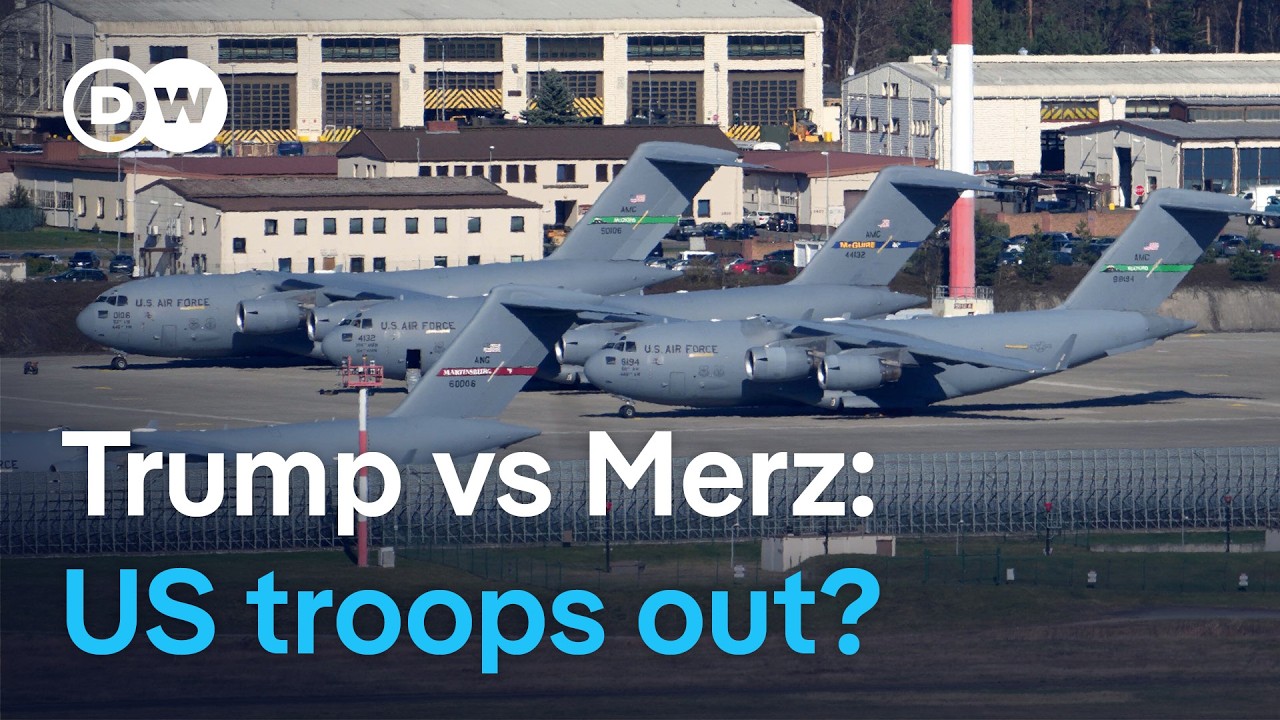
The **Pentagon** announced plans to withdraw approximately **5,000 U.S. troops** from **Germany** within the next six to twelve months. This move, confirmed on a Friday, fulfills a directive from President [[donald-trump|President Trump]] and represents a substantial reduction in the American military presence in a key European ally. The withdrawal is expected to impact various U.S. Army and Air Force units stationed in Germany, with implications for NATO's collective defense posture and the broader geopolitical landscape of Eastern Europe. The exact locations and units affected are still being determined, but the decision has already sparked debate among policymakers and defense analysts regarding its strategic rationale and potential consequences for regional stability. This redeployment marks a notable shift in U.S. military commitments in Europe, a region that has been a cornerstone of American foreign policy for decades, particularly following World War II and the Cold War. The move also raises questions about the future of U.S.-[[germany|German]] relations and the broader alliance structure of [[nato|NATO]].
Key Takeaways
- The U.S. plans to withdraw approximately 5,000 troops from Germany within 6-12 months.
- This move fulfills a directive from President [[donald-trump|President Trump]].
- The withdrawal represents a significant reduction in the U.S. military footprint in a key European ally.
- The decision has sparked debate about its strategic implications for [[nato|NATO]] and European security.
- Specific units and redeployment locations have not yet been fully disclosed.
Balanced Perspective
The withdrawal of 5,000 troops from Germany is a concrete action by the U.S. Department of Defense, impacting approximately 10% of the current U.S. troop presence in the country. The stated rationale is to fulfill a presidential directive, though the specific strategic objectives driving this decision remain subject to interpretation. The logistical and operational details of the redeployment, including the precise units and their new assignments, will be crucial in assessing the actual impact on U.S. force posture in Europe and globally. The timing and scale of the withdrawal suggest a deliberate, albeit significant, adjustment rather than a complete disengagement from the continent.
Optimistic View
This troop withdrawal could signal a strategic realignment, allowing the U.S. to redeploy forces to areas of greater strategic importance or to bolster readiness for emerging threats. It might also encourage [[germany|Germany]] and other European allies to increase their own defense spending and take on greater responsibility for regional security, fostering a more self-reliant and robust [[nato|NATO]]. The move could be seen as a necessary modernization of U.S. military commitments, adapting to a changing global security environment and optimizing resource allocation for maximum effectiveness.
Critical View
Reducing U.S. troop levels in Germany, a critical staging ground and logistical hub, could weaken NATO's deterrence capabilities against potential adversaries like [[russia|Russia]], particularly in Eastern Europe. This move might be perceived as a signal of waning U.S. commitment to European security, potentially emboldening adversaries and creating instability. Furthermore, the withdrawal could strain [[germany|German]]-U.S. relations and undermine the long-standing alliance, creating uncertainty and potentially leading to a more fragmented European defense landscape.
Source
Originally reported by PBS